Climate-Responsive Building Envelopes: The 2026 Definitive Guide
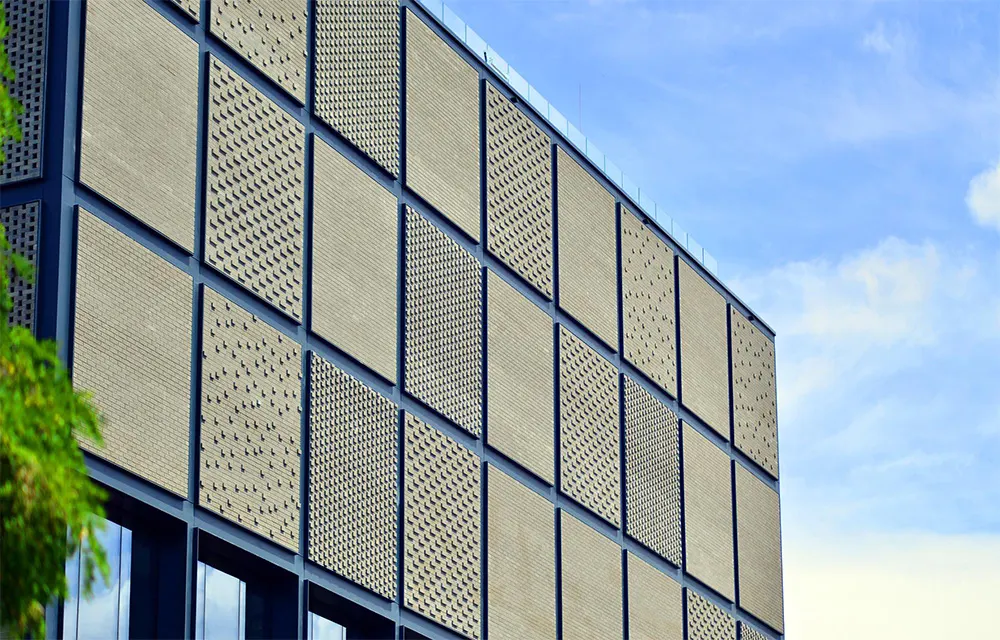
Climate-responsive building envelopes the building skin has historically been viewed as a static barrier—a defensive layer designed to exclude the elements and maintain a hermetic seal between the occupant and the exterior world. However, as the global climate enters a period of non-linear volatility, the traditional “closed-box” architecture is proving to be thermally brittle and energetically expensive. The emergence of high-performance architecture necessitates a shift from these static enclosures toward dynamic, filter-like membranes that can modulate their physical properties in real-time. This transition represents the move from the “Envelope as a Wall” to the “Envelope as an Organ.“
A sophisticated building enclosure in 2026 must do more than simply provide insulation. It must manage complex, multi-directional energy flows: solar radiation, latent and sensible heat, vapor pressure, and airflow. The challenge lies in the fact that these variables are rarely constant. A facade that is perfectly optimized for a clear, cold winter morning becomes a liability during a humid summer afternoon. Consequently, the discourse in modern structural engineering is pivoting toward “Responsivity”—the ability of a building’s outermost layer to sense environmental changes and enact a physical or chemical transition to mitigate their impact.
Navigating the transition to these advanced systems requires a forensic understanding of material science, thermodynamics, and kinetic engineering. It is no longer sufficient to specify a high R-value; one must now consider the “Thermal Lag” of the assembly, the “Spectral Selectivity” of the glazing, and the “Hygroscopic Potential” of the cladding. This inquiry serves as a definitive reference for architects and developers, moving beyond the surface-level aesthetics of “green design” to examine the deep structural and systemic logic required to build resilient, high-value assets in a changing world.
Climate-Responsive Building Envelopes
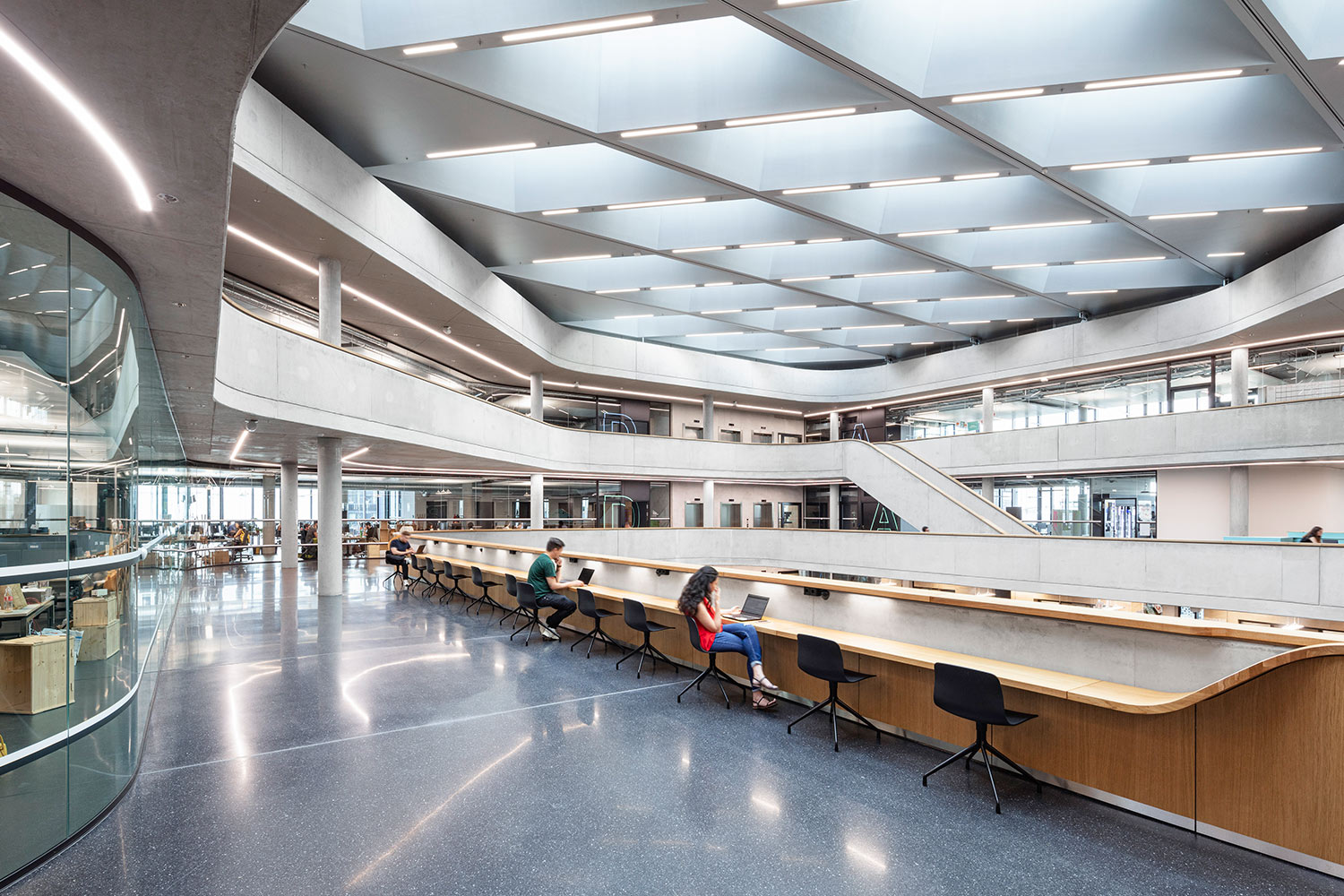
To master the application of Climate-Responsive Building Envelopes, one must recognize them as socio-technical systems rather than simple components. In a professional editorial context, these envelopes are defined by their “Operational Elasticity”—the capacity to change their U-value, transparency, or permeability without requiring total system replacement. It is the architectural equivalent of a biological skin that dilates or constricts to regulate internal temperature.
Multi-Perspective Explanation
Climate-responsive building envelopes from the perspective of a thermal engineer, the responsive envelope is a “Flux Management System,” designed to minimize entropy and maximize the retention or expulsion of Joules based on seasonal demand. From an architect’s view, it is a “Kinetic Canvas,” where the building’s appearance changes in response to the sun’s path, creating a symbiotic relationship with its site. From a developer’s perspective, it is a “Risk Mitigation Asset,” designed to lower the long-term operational expenditure (OpEx) of the building and insulate the property value from rising energy costs and carbon taxes.
Oversimplification and Risks Climate-Responsive Building Envelopes
A recurring oversimplification is the belief that “Active” (motorized) systems are inherently superior to “Passive” (material-based) ones. In reality, a motorized louvers system that fails due to a lack of maintenance becomes a permanent shading liability. Conversely, a passive phase-change material (PCM) that is improperly calibrated to the local climate may never reach its melting point, rendering it dead weight. The risk of ignoring “Systemic Integration” is the creation of a building that is technically advanced but practically dysfunctional—a structure where the envelope and the HVAC system “fight” each other, leading to energy waste and occupant discomfort.
Deep Contextual Background: The Vernacular to the Kinetic
The evolution of the building skin has moved through three distinct paradigms. The first was the “Mass-Based Vernacular,” seen in the thick adobe walls of the Southwest or the stone masonry of Northern Europe. These structures relied on high thermal mass to dampen diurnal temperature swings. The second paradigm was the “Lightweight Modernist” era, characterized by the glass curtain wall and the reliance on mechanical HVAC systems to “Brute Force” the internal climate into comfort.
The third paradigm, which we currently occupy, is the “Adaptive Era.” This period is defined by the realization that we can no longer afford the energy penalty of the glass box. We are returning to the wisdom of the vernacular—thermal mass and natural ventilation—but augmenting it with 21st-century materials: aerogels, thermochromic polymers, and automated sensor networks. This is the era of the “Smart Skin,” where the building behaves more like a living organism than a static object, constantly adjusting its “Albedo” (reflectivity) and “Emissivity” to maintain equilibrium.
Conceptual Frameworks and Mental Models Climate-Responsive Building Envelopes
To evaluate enclosure performance with professional depth, we utilize specific mental models:
1. The “Thermal Lag” Framework
This model evaluates the time delay between a change in outdoor temperature and the subsequent change in indoor temperature. A climate-responsive skin is designed to align this lag with the occupancy patterns of the building. In an office, you want the heat of the noon sun to reach the interior at 6:00 PM, when the building is emptying, not at 2:00 PM during peak load.
2. The “Spectral Selectivity” Logic
This framework distinguishes between different wavelengths of radiation. A responsive envelope is “Spectral Selective” if it can allow visible light to enter for daylighting while blocking the “Near-Infrared” (heat) wavelengths that cause cooling loads. In a cold climate, the logic is inverted during winter to capture “Passive Solar Gain.“
3. The “Hygrothermal Balance”
This model views the envelope as a regulator of moisture. It acknowledges that as we increase the airtightness of buildings to save energy, we increase the risk of interstitial condensation. A responsive skin must be “Breathable” in a controlled sense—modulating its vapor permeability based on the humidity differential between the interior and exterior.
Key Categories: Material and Mechanical Typologies
Remediating or building for responsivity requires a taxonomy of systems categorized by their “Trigger Mechanism.“
Realistic Decision Logic
The decision to implement Climate-Responsive Building Envelopes is driven by the “Climate Zone vs. Building Typology” matrix. For a hospital with a constant 24/7 internal heat gain from medical equipment, the envelope must prioritize “Heat Rejection” year-round. For a residential building with low internal gains, the envelope must be highly “Bimodal”—switching aggressively between high-insulation in winter and high-ventilation in summer.
Detailed Real-World Scenarios Climate-Responsive Building Envelopes
Scenario 1: The “Uncalibrated” PCM Failure
A residential developer in a Mediterranean climate installs Phase Change Materials designed to melt at 23°C (73°F).
-
The Incident: During a severe heatwave, the nighttime temperature never drops below 25°C.
-
The Failure: Because the PCM never “Recharges” (solidifies) at night, it remains liquid throughout the following day, losing its ability to absorb latent heat. The building overheats significantly more than a traditional mass-walled structure.
-
The Lesson: Responsive materials must be selected based on “Extreme Percentile” weather data, not just averages.
Scenario 2: The “Sensor-Lag” Oscillation
A high-rise utilizes automated blinds triggered by a light sensor.
-
The Symptom: On a day with intermittent clouds, the blinds “Hunt”—constantly opening and closing every 60 seconds.
-
The Outcome: The mechanical motors burn out within two years, and occupants report “Visual Fatigue.“
-
The Fix: Implementing “Damped Control Logic” where the system waits for a sustained 10-minute change in luminosity before enacting a physical move.
Planning, Cost, and Resource Dynamics
The implementation of a responsive skin is a “Front-Loaded” capital expenditure that pays dividends through “Avoided Infrastructure.“
Tools, Strategies, and Support Systems
Managing a dynamic enclosure requires a “Sim-to-Reality” orchestration stack:
-
Dynamic Energy Modeling (BIM): Tools like Ladybug or Honeybee that simulate solar radiation on a second-by-second basis to optimize the louver angles.
-
Computational Fluid Dynamics (CFD): Modeling how “Buoyancy-Driven” air moves through a double-skin facade to ensure effective cooling.
-
Weather Station Integration: Linking the building’s facade directly to local meteorological data to “Pre-empt” a cold front before it hits.
-
Predictive Maintenance Sensors: Utilizing vibration sensors on motorized louvers to identify a failing gear before the louver becomes stuck.
-
Double-Skin Facades (DSF): Creating a “Buffer Zone” between two layers of glass, allowing for controlled ventilation and protected shading.
-
Smart Coating Nanotechnology: Self-cleaning surfaces that maintain the “Albedo” of the building, ensuring it doesn’t absorb more heat as it gets dirty.
-
Life Cycle Assessment (LCA) Software: Evaluating the “Embodied Carbon” of a high-tech facade versus its “Operational Carbon” savings.
Risk Landscape and Failure Modes Climate-Responsive Building Envelopes
The “Risk Profile” of dynamic architecture involves “Mechanical and Logical Compounding.“
-
The “Locked-In” Mode: A motorized shade fails in the “Down” position during a power outage on a dark winter day, forcing the building to use electric lighting when solar gain was needed.
-
Interstitial Condensation: A “Smart Vapor Retarder” that fails to open during a humid summer, trapping moisture behind the insulation and leading to mold growth within the structural wall.
-
Spectral Mismatch: Using “Low-E” coatings that are so effective they block cellular signals, requiring expensive internal signal boosters (DAS) that negate the energy savings.
Governance, Maintenance, and Long-Term Adaptation
A responsive envelope is a “Living Asset” that requires “Continuous Commissioning.“
-
Review Cycles: Annual “Calibration Audits” for light and temperature sensors. Bi-annual “Mechanical Lubrication” for any kinetic components.
-
Adjustment Triggers: If the local utility changes its “Time-of-Use” pricing, the building’s facade logic should be adjusted to prioritize “Pre-Cooling” during cheap hours.
-
The Layered Checklist:
-
Quarterly: Inspect “Weep Holes” in the window frames to ensure moisture is escaping.
-
Bi-Annually: Clean “Reflective Coatings” to maintain the design SRI (Solar Reflectance Index).
-
Annually: Perform a “Thermal Drone Survey” to identify localized “Thermal Bridges” where insulation may have shifted.
-
Measurement, Tracking, and Evaluation
How do you measure the success of a dynamic enclosure?
-
Leading Indicators: “Peak Load Reduction”—the delta between the building’s theoretical peak demand and its actual demand during a heatwave.
-
Lagging Indicators: “Energy Use Intensity” (EUI) and “Occupant Comfort Surveys.“
-
Quantitative Signals: “Mean Radiant Temperature” (MRT)—a measure of how comfortable a person feels near the window, which is often a better metric than air temperature.
-
Documentation Examples:
-
The “Facade Log”: A record of how many hours the louvers were active and the resulting energy saved.
-
The “Condensation Risk Map”: A digital model showing the moisture profile of the wall assembly over a typical year.
-
Common Misconceptions and Industry Myths
-
Myth: “High R-value is the only thing that matters.“
-
Reality: For a commercial building with high internal heat (computers/people), a high R-value can actually “Trap” heat, increasing cooling costs. “Responsivity” is about control, not just resistance.
-
-
Myth: “Smart glass replaces the need for blinds.“
-
Reality: While smart glass manages heat, it doesn’t always manage “Glare.” Occupants still need physical shading to see their computer screens comfortably.
-
-
Myth: “Responsive buildings are too complex for regular contractors.“
-
Reality: While the engineering is complex, the “Installation” is increasingly modular. The complexity is shifting from the field to the factory.
-
Ethical and Practical Considerations Climate-Responsive Building Envelopes
The move toward high-tech envelopes raises questions of “Technological Equity” and “Resilience.” If a building relies entirely on electricity to remain thermally safe, what happens during a long-term grid failure? A professional editorial perspective suggests that the most ethical responsive envelopes are “Fail-Safe”—meaning they utilize “Passive-First” logic (like PCM or manual overrides) to ensure the building remains habitable even when the “Smart” systems are offline. We must build for the “Edge Case,” not just the average day.
Conclusion
The architecture of the future is not a monument of stone, but a performance of physics. To master Climate-Responsive Building Envelopes is to embrace the inherent instability of our environment and turn it into a driver for efficiency. By prioritizing material intelligence over mechanical brute force, and by designing for the non-linear “P-F Intervals” of climate stress, we can create structures that are as resilient as they are beautiful. The building skin is no longer a boundary; it is the primary interface through which we negotiate our survival in a warming world.